
"Pink Ladies": Another Perspective

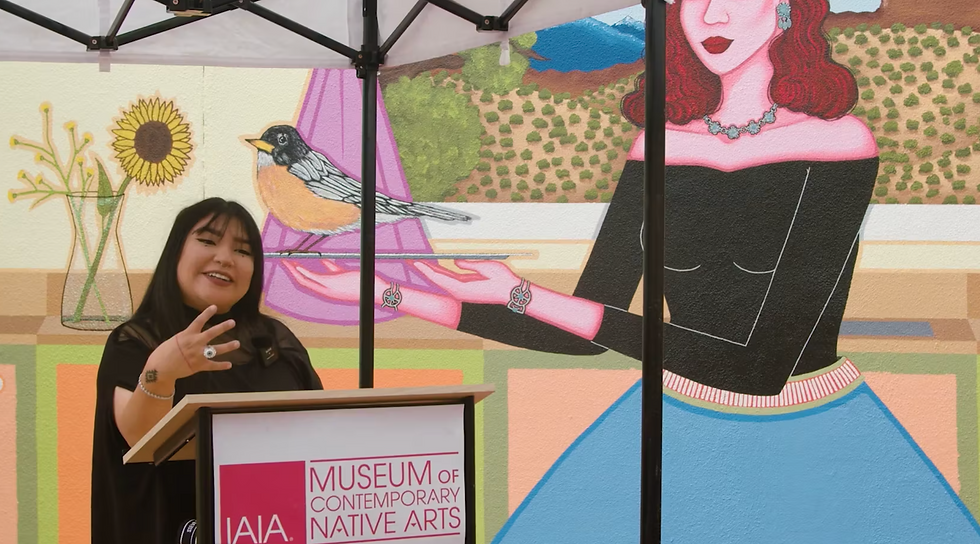
In the weeks leading up to Rob's surgery, I had a chance to attend the Convocation and Campus Blessing for the IAIA (Institute of American Indian Arts) spring semester. It began in the Dance Circle with a four-directions campus blessing followed by lunch, remarks by the President, Dr. Shelly C. Lowe, and a keynote address by a Native Actor from the show "Dark Winds", Deanna Allison.
The entire day was enlightening, inspiring, and delightful.
But the real highlight for me was seeing the exhibition "Pink Ladies" by Native artist Robyn Tsinnajinnie. Her large, bright paintings hung in the hallway outside the lunch area, and I spent quite a bit of time standing in front of each one, soaking in the colors and the stories they told.
At first glance, the paintings look happy - the colors are eye-catching, and the compositions remind me of a comic book panel. They seemed to have an element of humor. But upon closer inspection, the stories being told were harrowing and left me feeling sad. That seeming contradiction - vibrant colors and dark commentary - is a large part of why I found her paintings to be so impactful and memorable.
Here is an excerpt from her artist statement:
She learned that she could process the hard realities of simply existing as a Navajo woman through her work by focusing on the women she paints. She enjoys placing her female figures in powerful positions in her creations while setting them in stereotypical surroundings that include male figures and other props to construct a dramatic scene.
Each painting she creates reveals a place and a circumstance that women may find themselves in, all while the women painted fill the space and assert themselves over their surroundings.
Overall, Tsinnajinnie's goal is to use what is oppressed on women and turn it around with humor instead of anger.
And here are some of her paintings from the "Pink Ladies" series. Take time to really look at the details in the images, as they are all important to the stories told:
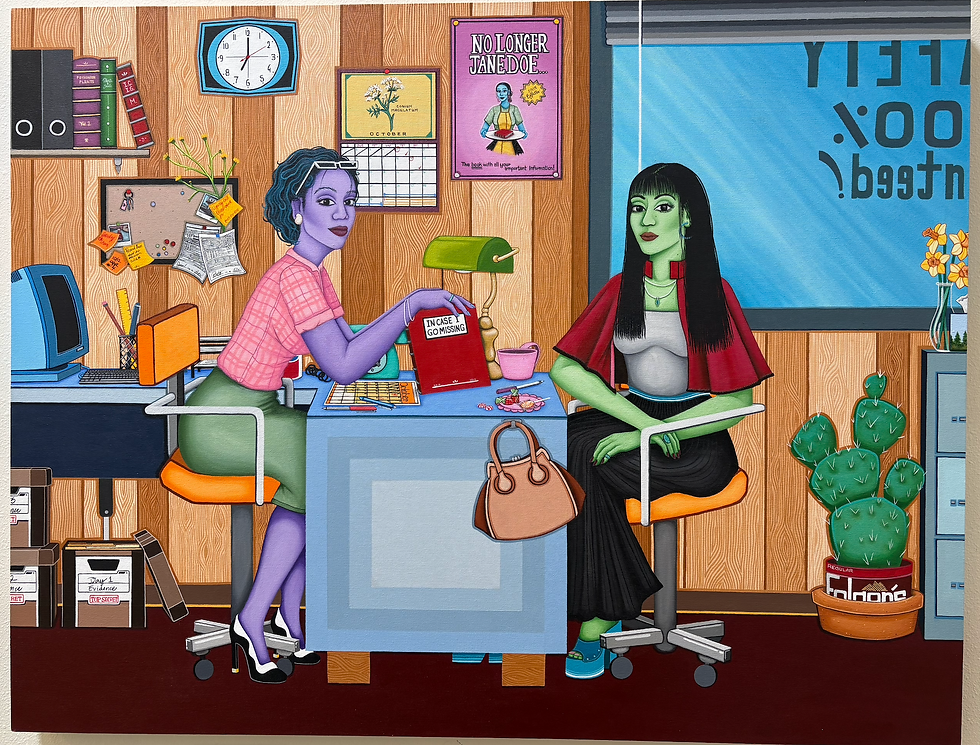
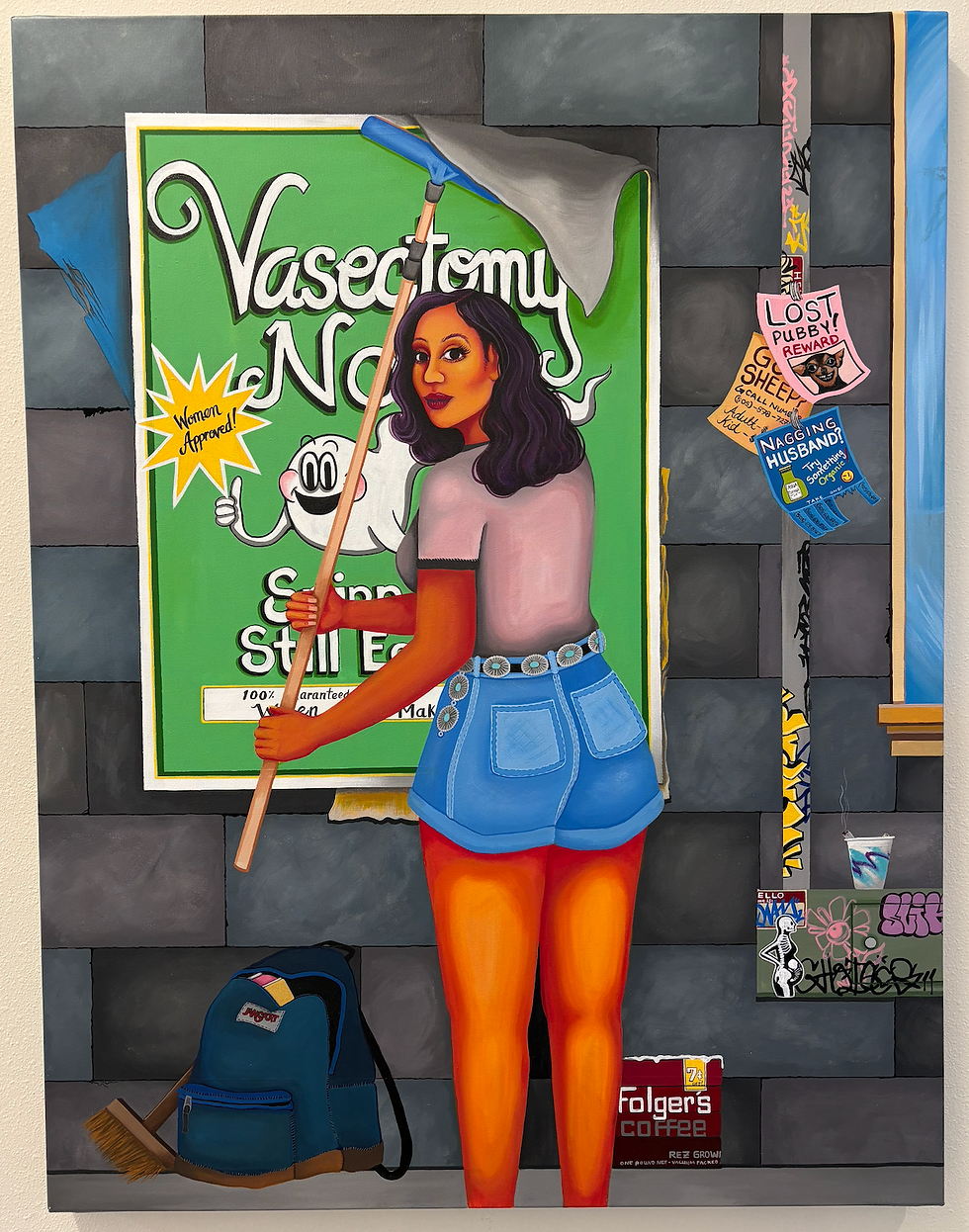

What became obvious as I walked the hallway, stopping to study each painting, is that men, their behavior, and violence are at the center of her work, even though her paintings feature women.
And that raised the question of how do we tell women's stories without focusing on the impact men have on every aspect of a woman's life?
I faced a similar conundrum with my still life paintings. Many of my paintings' topics were inspired by my life experiences with men who physically or emotionally abused either me or women I know and love. For example, my painting "Regime Change" started from a place of anger about the patriarchy, but became a celebration of women of color.
It is easy to fall into hate and fear.
I find it much harder to "fall into" love and abundance, but I try.
Dear reader, I'm going to switch gears now and write about my most recent experience of falling into fear. I hope you stay with me.
The past few weeks dealing with all the unknowns around my husband's prognosis have been a struggle, and I ended up in a place of fear and anger. I had intended to purposefully act from a place of love and kindness to support my husband in any way he needed. But the extreme stress of the situation put me into a "fight or flight" way of being, and time and time again, I acted out of fear. My sense of humor disappeared completely.
Not my best moment.
Although I recognize that it was a very human moment.
Over the past few days, I've had the opportunity to get in the studio and work on my next 5 Senses painting. Spending time breathing deeply, looking carefully, and appreciating what I see (the light! the shadow! the color! the shape!) has done wonders to calm my nervous system and rebuild my resiliency.
It's also given me some time to see the past few weeks from a different perspective and forgive myself for being afraid. Plus, I've had time to reframe the situation, see the possible opportunities, and regain some of my hope, love, and patience.
Going forward, I'm going to take the time to acknowledge the stress I feel (instead of bottling it up), add more anti-stress activities into my day (yoga, painting, reading, screaming, throwing things safely, meditation, journaling), and purposefully turn my attention to what I want to experience (calm, love, ease, and humor).
To quote astrologer Pam Gregory, "Starve out the scary, love in the good".
Or, in other words, as long as we keep giving our time and attention to what we don't want, we will continue to create it and see it all around us. Instead, our time is much better spent giving our focus and attention to what we DO want and then finding it or creating it all around us.
And maybe that's how we tell women's stories, we create them aspirationally. i.e., in a way that is hopeful and focused on achieving an improved or idealized future. A future where strong women and strong men equally support, help, and provide for one another. Where service to others (teaching, caregiving, cooking, cleaning) is highly valued and respected. And where every individual feels seen, heard, and understood.
Let's imagine that world and love it into existence.


Comments